Legal Stages of the Startup

With the development of the entrepreneurship ecosystem, many entrepreneurial candidates started working to bring their business ideas to life. There are some legal processes that entrepreneur candidates need to know in order to realize their business ideas. These legal processes are called startup law. Topics such as what is startup law and what are its rules are topics of interest. As Startupfon Blog, our topic this week is the legal stages of Startups.
Startup law is a system that has emerged for the purpose of enabling entrepreneurs to operate in accordance with the law, has close relations with many legal regulations that shape commercial life, and regulates the relations between the entrepreneur and the investor, and both the entrepreneur and investor parties and the legal order.
Legal processes can be encountered in almost all phases of the startup, starting from the initial stage. In order to avoid legal risks and disputes afterward, it is important to manage the legal processes very well and to get appropriate legal advice. The entrepreneur is not subject to the ban on trading and other profitable activities, the product or activity subject to the venture is in compliance with the legal order, and the new venture is in no way affiliated with the trade name, business name, domain names, intellectual and industrial, etc. of third parties. A detailed investigation should be carried out on issues such as not violating their rights. In order to develop every stage of the Startup on a solid legal basis and to protect the Startup in continuation, it is necessary to act in accordance with the law and legal regulations. Fulfilling these requirements also has a great place in the search for future investors and partnership relations, which is one of the aims of Startup projects.
1. Legal Protection of Idea
The emergence of the idea is the first stage of the Startup project. First of all, it is important to conduct preliminary research on how the new idea differentiates itself and how these differences should be protected within the framework of intellectual and industrial rights. Within the scope of this preliminary research, it should be evaluated whether the idea violates the intellectual and industrial property rights of other real persons or companies. In order to avoid problems such as the use or copying of the new idea by others, it should be a priority for Startups to put these ideas under legal protection at the beginning.
In order to legally protect the project idea and the product and service created within the scope of the idea, patents, trademarks, models, and ideas are registered, as well as copyrights are determined. In this context, in order to protect products, services, and works against third parties, an intellectual property strategy should be established at the very beginning of the process and the necessary application and registration procedures should be carried out in parallel with this strategy.
2. Contracts
Startups also encounter contracts, which are one of the indispensable elements of commercial life, at every stage. In this context, starting from the first emergence of a new idea, Startups should prepare contracts that will provide the necessary legal protection and analyze the contracts they encounter well. Although the benefits of the contracts prepared in accordance with the processes of the Startup are numerous;
- It provides protection of ideas and initiatives.
- It contributes to the healthy and stable growth of the enterprise.
- It takes relationships with investors and customers to a more professional dimension.
- Additional investments, share sales, loan purchases, etc. that may be realized in the following stages. It provides convenience in legal review processes in transactions.
- It prevents possible conflicts and problems.
3. Incorporation Phase
Deciding on the type of company during the incorporation phase of startups; is important in matters such as taxation, the responsibilities of the company and its partners in case of any mishap, and the legal obligations of the company. For this reason, it is necessary to determine the most suitable type of company for the activity, objectives, and characteristics of the Startup in question during the establishment phase of the company. According to Turkish legislation, startups can be established as a sole proprietorship or any of the capital companies. However, since sole proprietorship is riskier in terms of individual liability, joint stock or limited liability companies are generally preferred among capital companies. That is, in private companies, the partners are responsible for the debts of the company with all their assets, while in limited and joint stock companies they are not personally liable.
4. Investment Phase
One of the main starting points of startups is that the project can survive in commercial life and then turn it into a revenue-generating value with a rapid growth momentum. In parallel, there are partnership and investor models in the Startup culture, either by hiring investors in exchange for the company's share or by transferring the company after they reach a certain value. It is important to receive investment for the development, growth, and profit of the startup. In this context, the types of investors that can apply during the establishment phase of the venture are;
- Angel Investors,
- Venture Capital,
- Private Equity,
- It is Crowdfunding.
Here, we would like to emphasize that when partners or investors decide to invest in a Startup project, they consider not only the new business idea but also whether the project has a professional financial and legal structure in its entirety.
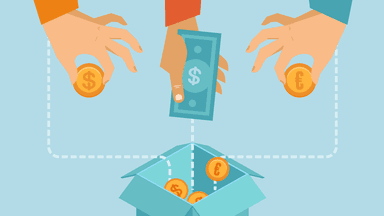
Angel investors are individual investors who want to invest in new ventures with high risk and return potential and have sufficient financial background and experience for this. Venture capital investors, unlike angel investors, are institutional investors who invest in larger amounts at later stages of the company. Crowdfunding, on the other hand, is the financing of a project or initiative by a small number of people via the Internet in small amounts.
In conclusion; Many companies that started their business life as Startups have become one of the most valuable companies in the world in a short period of time. The best examples of these are Startups such as Airbnb and Uber. For a Startup to be successful and sustainable as in these examples; It can be said that it depends on the good management of the legal processes from the beginning, the adoption of a correct incorporation approach, and the successful management of the investment processes.